

Varicose vein treatment in Bratislava
We treat varicose veins using a full range of methods to help you get rid of heavy legs, swelling and visible varicose veins. These include EVLA laser ablation, ultrasound-guided foam sclerotherapy, microphlebectomy and, for extensive findings, conventional surgery. At the Dermarevolta clinic in Bratislava, we design a tailored treatment plan after a duplex ultrasound scan. Most procedures are carried out on an outpatient basis under local anaesthesia, so you don't need to worry about hospital stays or lengthy recovery.
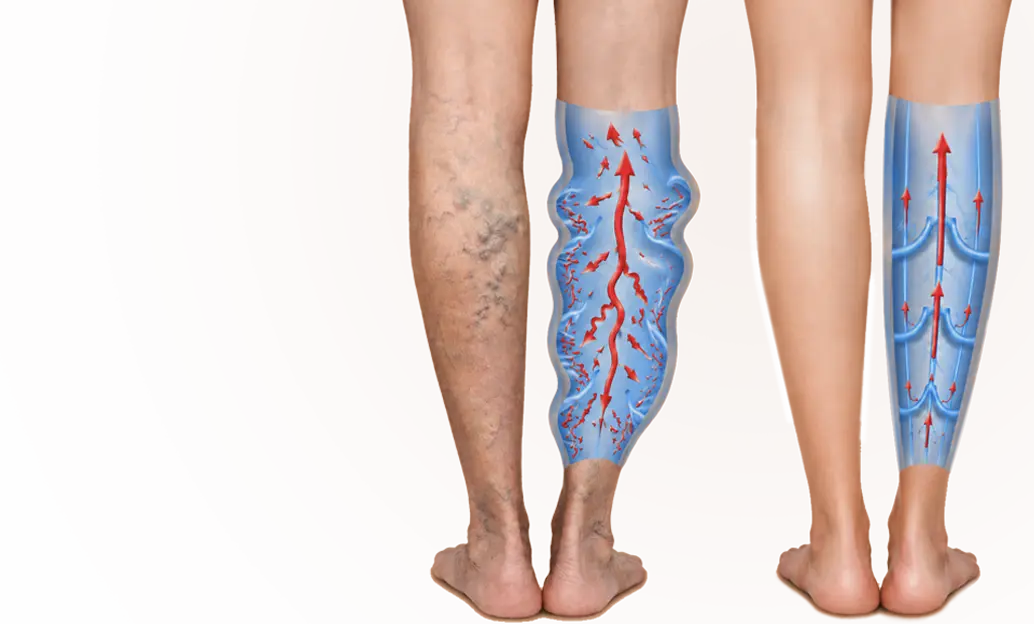


What methods we use to treat varicose veins
We select the method of varicose vein treatment according to the extent of the findings and the type of affected veins, always after a duplex ultrasound examination. For truncal veins, EVLA laser ablation has proven effective, while smaller varicose veins are treated with foam sclerotherapy; larger nodules are removed by microphlebectomy, and for extensive findings we opt for conventional surgery. Early symptoms and small spider veins can be managed conservatively or with aesthetic treatments. The aim is to relieve symptoms, improve the appearance of the legs and restore proper blood flow, with most procedures performed on an outpatient basis under local anaesthesia.

Conservative treatment and compression
In the early stages, and as a complement to procedures, compression therapy, venotonics and regular movement can help. They slow the progression of the condition and reduce swelling and heaviness in the legs, but they do not remove the varicose veins themselves.

Ultrasound-guided foam sclerotherapy
A special foam is injected into the varicose vein under ultrasound guidance, irritating the vein wall and causing it to close. This method is suitable for smaller varicose veins and their branches. It is performed on an outpatient basis, without incisions and without anaesthesia.

EVLA, endovenous laser ablation
A laser fibre is guided under ultrasound into the damaged truncal vein and uses heat to close it from within. Blood is then redirected into healthy veins. The procedure is minimally invasive, performed on an outpatient basis and carried out under local anaesthesia.

Microphlebectomy for varicose veins
Larger varicose veins are removed through tiny punctures using a special hook, without large incisions and with virtually no scarring. The procedure is performed on an outpatient basis under local anaesthesia and is often combined with EVLA laser ablation.

Surgical treatment of varicose veins
For extensive findings, conventional surgery, such as crossectomy and stripping of the truncal vein, still has its place. It removes the affected section of the vein and can also address advanced varicose veins. The need for surgery is determined by the phlebologist after an ultrasound scan.

CLaCS and treatment of spider veins
We treat small spider veins with laser, microsclerotherapy or the CLaCS method. You can find detailed information on spider vein treatment on a separate pagewhich we will be happy to direct you to if you are interested.
How a phlebology examination and varicose vein treatment work at Dermarevolta


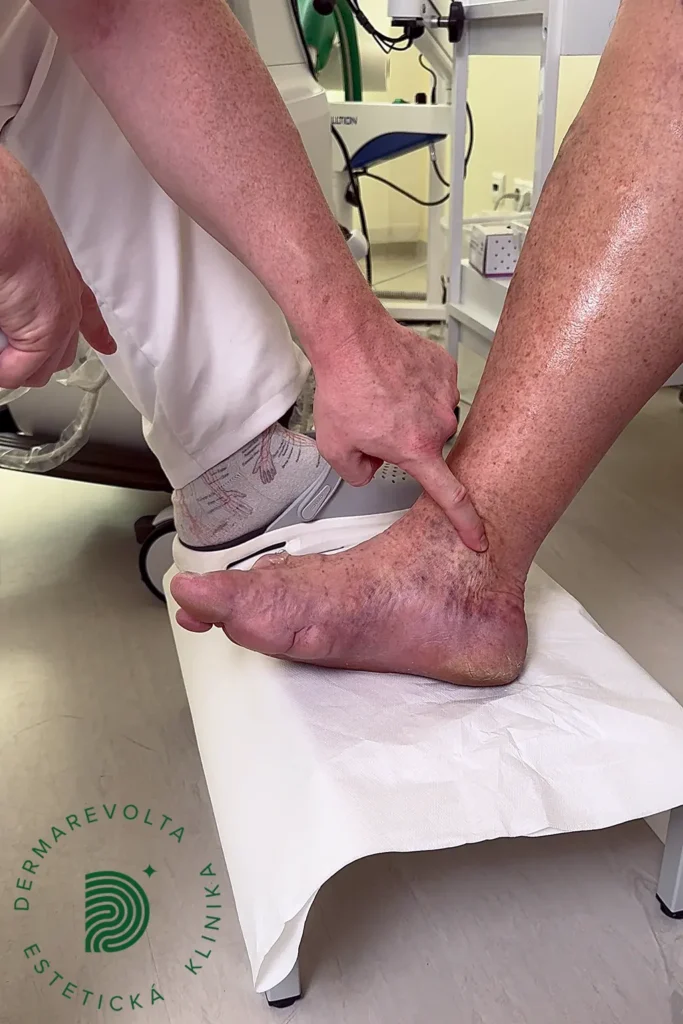
Price list for varicose vein treatment
The price of varicose vein treatment depends on the method chosen and the extent of the findings, so we can only determine it precisely after an ultrasound examination. We are a private clinic; procedures are paid for directly at the clinic, and most modern methods are not covered by health insurance. An initial consultation with a phlebologist costs €65, or €105 including a venous ultrasound scan. Below we list indicative prices for selected procedures; the full price list is available on a separate page.
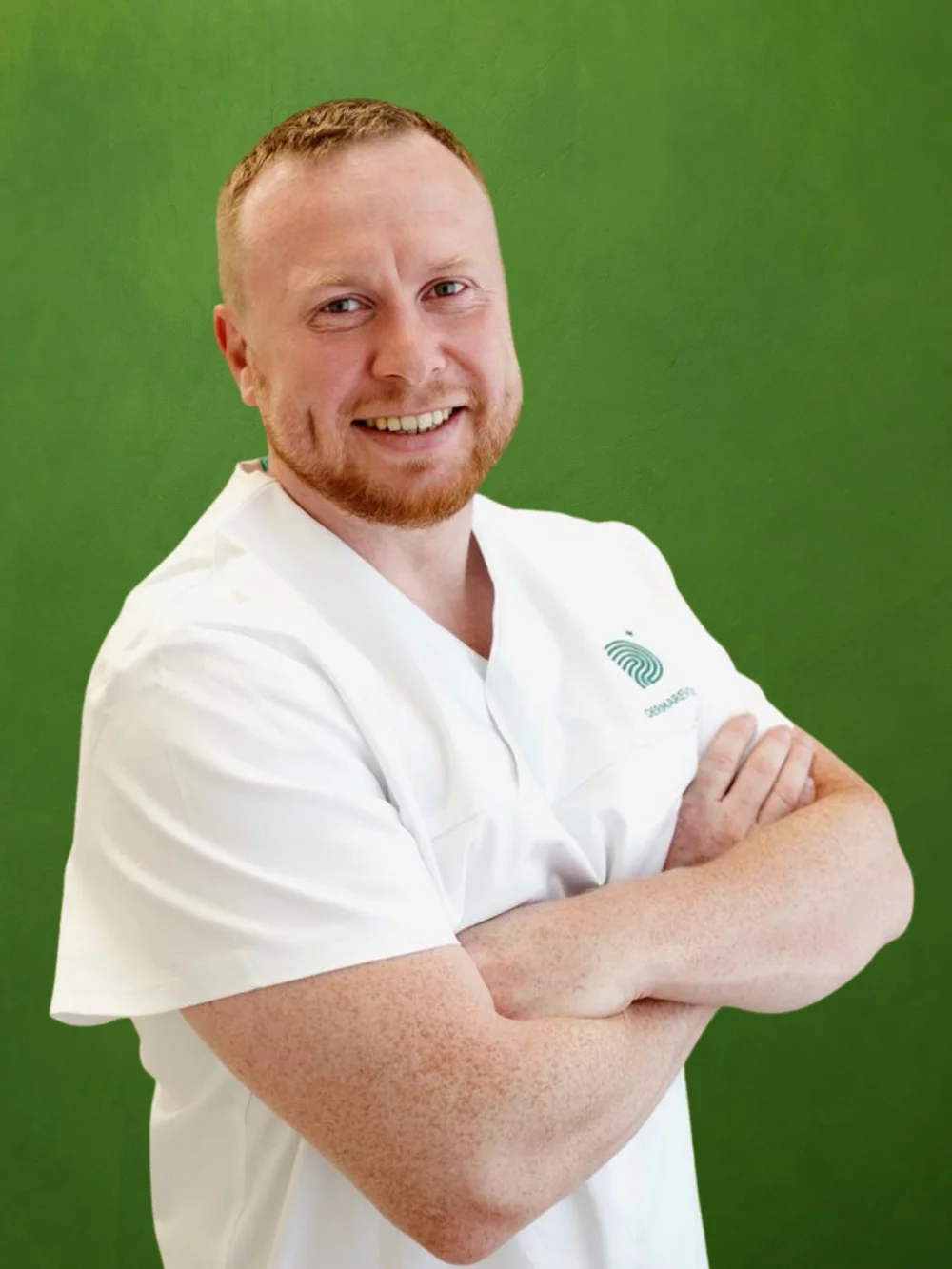
Vasilii Bulatov, CSc.
Phlebologist and vascular surgeon, treatment of varicose veinsTreatment of varicose veins at the Dermarevolta clinic is led by Vasilii Bulatov, a phlebologist and vascular surgeon specialising in venous disease. He completed his medical studies in 2007 and trained in general and cardiovascular surgery. In 2015, he obtained a scientific degree (CSc.), with his dissertation focused on laser treatment of varicose veins.
He specialises in the diagnosis and minimally invasive treatment of varicose veins, spider veins and chronic venous insufficiency. For examinations, he uses duplex ultrasound diagnostics, and for treatment, methods such as EVLA, ultrasound-guided foam sclerotherapy and miniphlebectomy. He is a member of the International Union of Phlebology (UIP) and communicates in Slovak and Russian.
“The aim of treatment is to alleviate the symptoms of venous disease, improve the patient’s comfort and promote the health of the lower limbs. I always choose the method based on the ultrasound findings, so that the procedure is as gentle as possible and the result looks natural.” — Vasilii Bulatov
When to consider treatment for varicose veins
- Visible bulging or winding varicose veins on the legs that gradually enlarge and darken.
- Swelling of the legs and ankles, heaviness or a feeling of tired legs that worsens towards the end of the day and in warm weather.
- Pain, burning or night-time cramps in the calves, especially after long periods of standing, sitting, extended walking or in warm weather.
- Spider veins on the thighs and calves that bother you for aesthetic reasons and are gradually increasing in number.
- Itching, dry skin or brownish discolouration of the skin around the ankles associated with long-standing varicose veins.
- Inflammation of a vein, a hard, painful vein or a non-healing ulcer on the lower leg as a sign of complications from varicose veins.
Why choose treatment of varicose veins at the Dermarevolta clinic

Experienced phlebologist
Treatment is led by Vasilii Bulatov, a phlebologist and vascular surgeon holding a scientific degree (CSc.) and a member of the International Union of Phlebology. You receive both diagnosis and treatment from a single vein specialist.
Precise ultrasound diagnostics
Before every procedure, we perform a duplex ultrasound examination to map the veins and detect reflux. This allows us to select a targeted treatment and avoid unnecessarily treating healthy veins.

Minimally invasive methods
Most varicose veins are treated using minimally invasive methods, laser, foam sclerotherapy and miniphlebectomy, without large incisions. For extensive findings, we turn to conventional surgery.

Outpatient, same-day procedure
Most procedures are performed on an outpatient basis, under local anaesthesia, as part of day-case care. After a short period of rest, you go home the same day, with no need for hospitalisation.
No referral required
As a private clinic, we schedule your appointment directly, without a referral from your GP and without long waiting times. You can get an appointment quickly, by phone or through the online form.

Transparent pricing
You know the price of the initial consultation and approximate procedure costs in advance, and the phlebologist will confirm the exact amount after the examination. The Dermarevolta clinic has been operating in Bratislava since 2013, at Smaragdová 1.
Frequently asked questions about the treatment of varicose veins
The cost of treating varicose veins depends on the method used and the extent of the findings. An initial consultation with a phlebologist costs €65, or €105 including a venous ultrasound scan. Foam sclerotherapy starts from €200, miniphlebectomy from €150, and laser ablation (EVLA) from €720. The exact amount will be confirmed by the phlebologist after the ultrasound examination, as it depends on the number and size of the affected veins.
During EVLA, a thin laser fibre is inserted into the damaged vein through a small puncture, under ultrasound guidance. The laser heats the vein wall and seals it from the inside; the body then gradually absorbs the vein, and blood is redirected to healthy veins. The procedure is minimally invasive, performed on an outpatient basis under local or tumescent anaesthesia, and you go home after a short rest.
Modern treatment of varicose veins is almost painless, and general anaesthesia is usually not required. Minimally invasive procedures such as EVLA, sclerotherapy or miniphlebectomy are performed under local or tumescent anaesthesia, so you feel only mild pressure. After the procedure, the leg may be sensitive for a few days, and a compression stocking is worn.
Recovery after minimally invasive procedures is short, and you can usually return to normal activities within a few days. It is recommended to wear a compression stocking, walk sufficiently, and avoid strenuous exertion, saunas and prolonged standing for a few days. The exact regimen and follow-up appointment will depend on the type of procedure and the extent of the findings.
Some conventional surgical procedures for varicose veins may be covered by public health insurance, but modern minimally invasive methods such as laser ablation (EVLA) or foam sclerotherapy are usually paid for by patients as a private procedure. At the Dermarevolta clinic, you pay for treatment directly at the clinic according to the price list. The exact amount will be confirmed by the phlebologist after the examination.
There is no universally best method; it is chosen according to the extent of the findings following an ultrasound examination:
- EVLA (laser), for affected trunk veins,
- foam sclerotherapy, for smaller varicose veins and branches,
- miniphlebectomy, for larger nodules through tiny punctures,
- conventional surgery, such as crossectomy and stripping, for extensive findings.
Methods are often combined. The phlebologist will recommend an approach that is as gentle as possible while remaining effective for your particular findings.
The treated vein closes off and is absorbed by the body, so that particular varicose vein will not return. However, venous disease is chronic, so new varicose veins may appear elsewhere over time, especially with a hereditary predisposition. Compression, physical activity and regular check-ups with a phlebologist, which are part of ongoing care, help reduce this risk.
Book an examination or consultation
