

Laser removal of spider veins
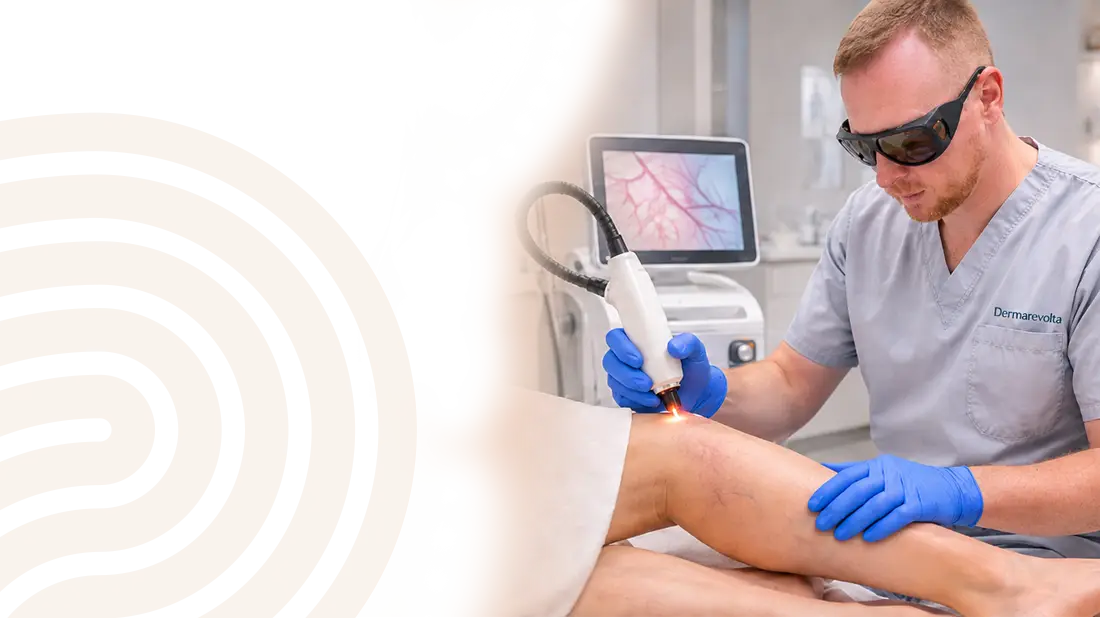
We gently remove spider veins, the small red or blue vessels on the legs, using laser treatment and sclerotherapy, without major procedures and with a visible aesthetic result. Laser treatment is quick and almost painless, usually without injections and without the need for recovery time. Treatment is led by phlebologist and vascular surgeon Vasilii Bulatov, who assesses the type of veins and chooses a suitable method. For larger or interconnected spider veins, we combine laser with microsclerotherapy.


How we remove spider veins
We treat spider veins according to their size, colour and depth, always after assessment by a phlebologist. Superficial, fine veins are closed with a laser that heats them precisely without an injection, while larger or interconnected spider veins are treated with microsclerotherapy or the CLaCS method, which combines laser with cooling and sclerotherapy. The treatment is outpatient, quick and usually does not require any time off your normal routine. The result develops gradually, and sometimes more sessions are needed for the veins to disappear completely. Before treatment, we use ultrasound to rule out larger varicose veins as the underlying cause.

Laser removal of spider veins
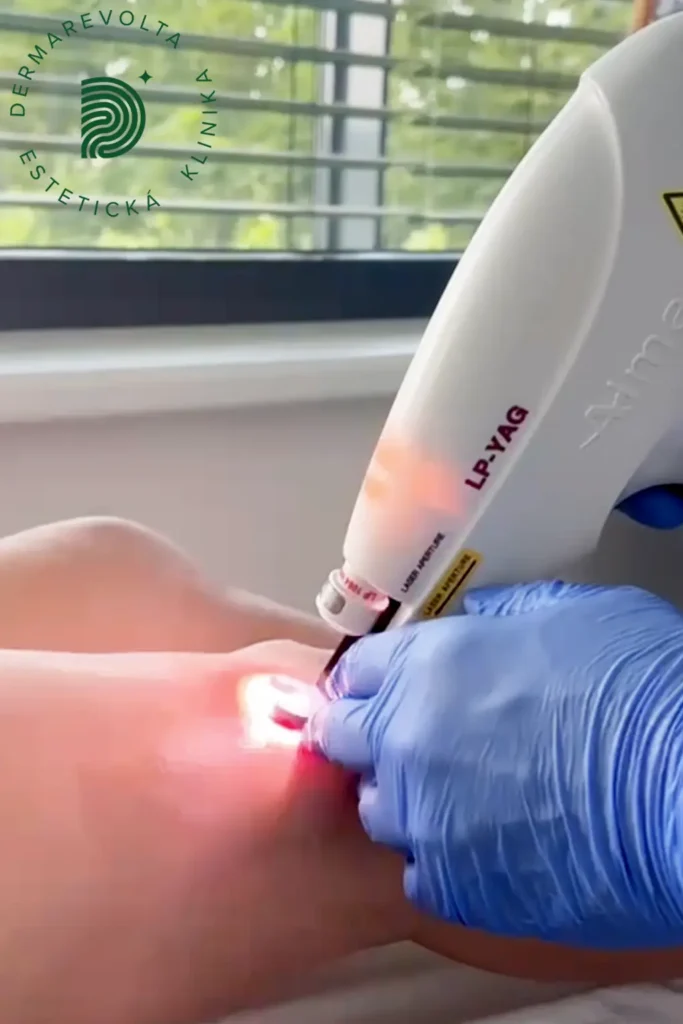
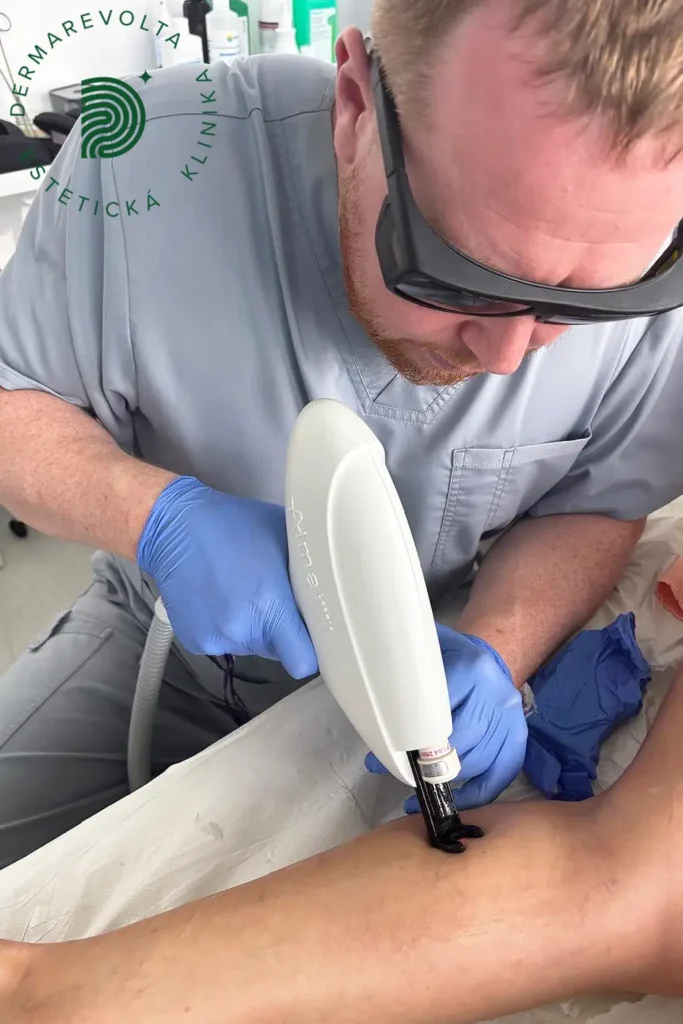
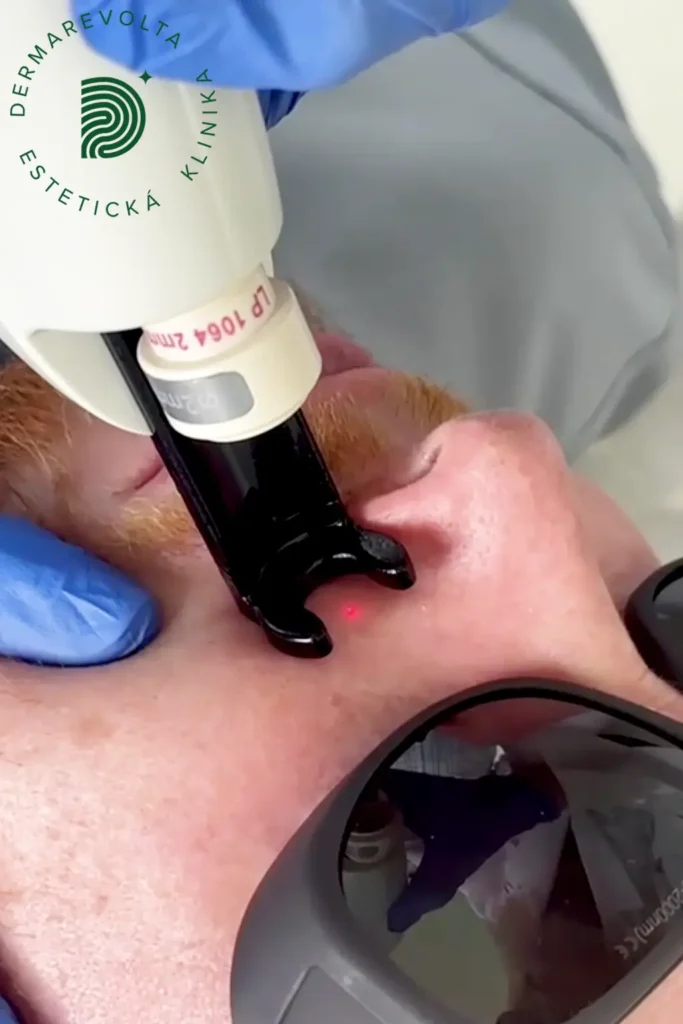
The laser precisely heats and closes fine superficial veins without an injection. The vein gradually breaks down and fades. This method is suitable for small spider veins on the legs and face and is performed on an outpatient basis, with no recovery time needed.
Microsclerotherapy for spider veins
A solution is injected into larger or interconnected spider veins through tiny injections, closing the vein so that it gradually disappears. This method is particularly suitable for veins on the legs. Several sessions spaced apart are sometimes needed.
CLaCS, a combined laser method
CLaCS combines skin cooling, laser and sclerotherapy for precise, gentle treatment of spider veins. Cooling increases comfort and protects the skin during the procedure. It is suitable for more extensive or aesthetically more challenging cases.
Quick and almost painless treatment
Laser treatment of spider veins is short, and most people feel only mild warmth. Anaesthesia is usually not needed, and you can return to your normal activities straight after the procedure. The skin may be briefly red.
Treatment tailored to the type of veins
We choose the method according to the size, colour and depth of the spider veins, always after assessment by a phlebologist. Fine veins are treated with laser, larger ones with sclerotherapy, and extensive cases with a combination of methods. The aim is the best possible aesthetic result.
A gradual, natural-looking result
Treated veins do not disappear immediately; the result develops gradually over the following weeks. More extensive spider veins often require several sessions. The result is naturally even-looking skin without prominent veins.
Laser removal of spider veins in practice
Price list for laser removal of spider veins
The price of spider vein removal depends on the number of pulses, the extent of the veins and the number of sessions, so we determine it precisely after assessment by a phlebologist. We are a private clinic, and patients pay for aesthetic treatment of spider veins as a private procedure. An initial consultation with a phlebologist costs €65. Below are indicative prices for spider vein treatment; the full price list is available on a separate price list page.
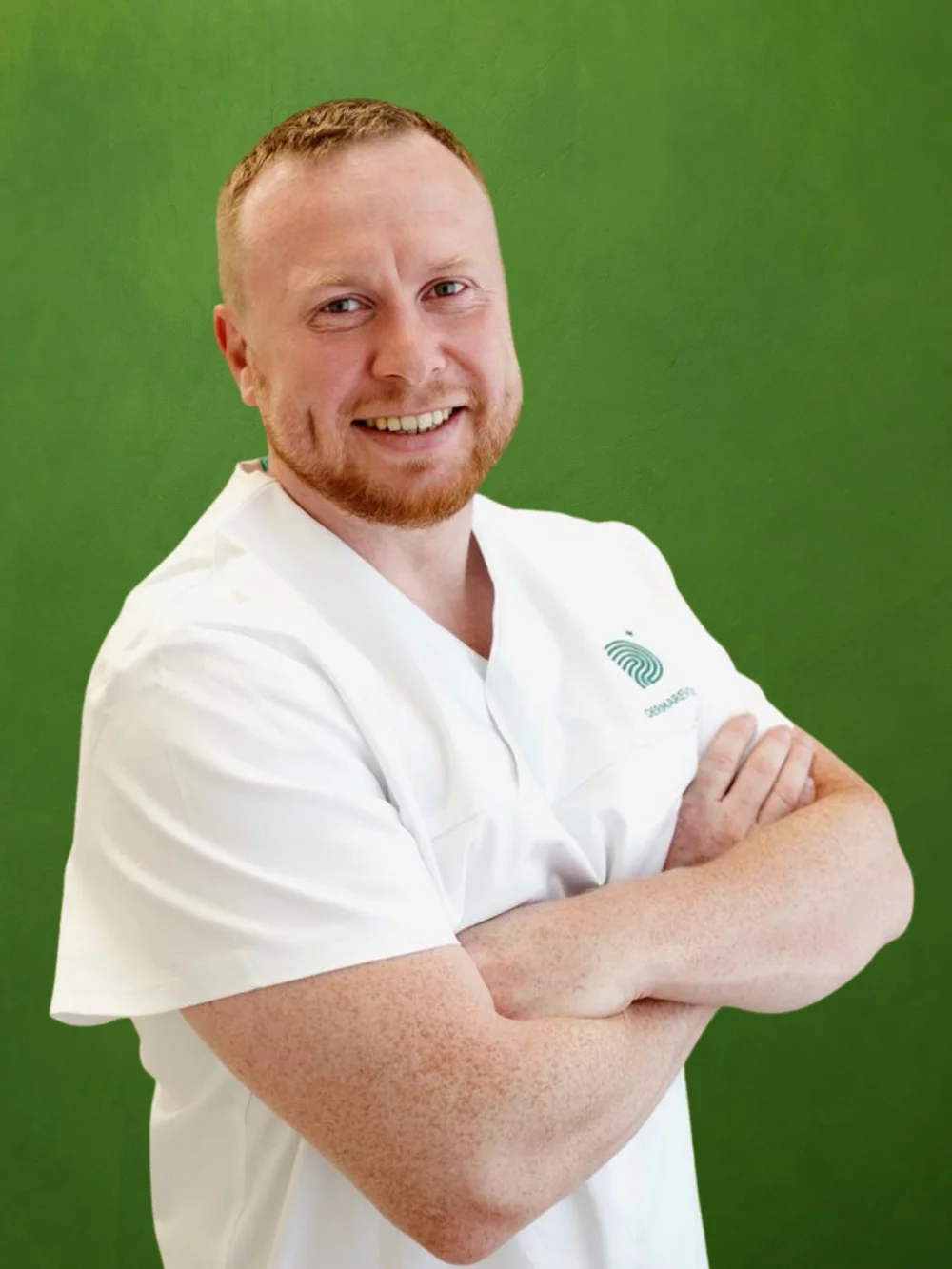
Vasilii Bulatov
Phlebologist, CSc.Treatment of spider veins at the Dermarevolta clinic is carried out by Vasilii Bulatov, phlebologist, CSc. He studied medicine between 2007 and 2011, training in general and cardiovascular surgery. In 2015 he obtained the degree of Candidate of Medical Sciences (CSc.), with his dissertation focused on laser treatment of varicose veins.
He specialises in both aesthetic and medical treatment of veins, ranging from spider veins to varicose veins. When treating spider veins, he uses laser, microsclerotherapy and the CLaCS method, always after assessing the type of veins involved. Before an aesthetic procedure, he uses ultrasound to rule out any deeper venous system disorder. He is a member of the International Union of Phlebology (UIP) and communicates in Slovak and Russian.
„Cieľom estetického ošetrenia metličiek je prirodzene vyzerajúca koža bez výrazných žiliek. Metódu volím podľa typu a hĺbky žiliek a najprv vylúčim, že za nimi nestojí väčšie žilové ochorenie, ktoré treba riešiť skôr.“ – Vasilii Bulatov
When to consider spider vein removal
- Spider veins on the thighs, calves or ankles that bother you cosmetically and that you'd like to get rid of.
- Spider veins that are gradually increasing in number, darkening or spreading into larger areas on the thighs and calves.
- Spider veins accompanied by heaviness or swelling in the legs, which may indicate a venous condition.
- An interest in a quick, gentle laser treatment with no injections and no lengthy recovery afterwards.
- New spider veins that appeared after pregnancy and childbirth, or due to sedentary work or jobs that involve standing for long periods.
- A previous spider vein treatment with unsatisfactory results that needs to be professionally reassessed and followed up.

Why choose us for spider vein removal

Treated by a phlebologist
Spider veins are treated by Vasilii Bulatov, a phlebologist and vascular surgeon, and a member of the International Union of Phlebology. This means the aesthetic procedure is carried out by a doctor who understands the entire venous system of the legs.
We first rule out varicose veins
Before the aesthetic treatment, we use ultrasound to check that there are no larger varicose veins behind the spider veins. This helps prevent the spider veins from quickly returning due to an unaddressed underlying cause.

Laser treatment without injections
We treat fine spider veins with a laser that seals them without a needle or incision. The treatment is quick, almost painless, and you can return to your usual activities straight afterwards.

More methods to choose from
Depending on the type of veins, we combine laser, microsclerotherapy and the CLaCS method. This allows us to gently treat both fine and larger, interconnected spider veins and achieve a better aesthetic result.

Outpatient treatment with no waiting
The treatment is outpatient, requires no referral, and involves no long waiting times. You can book directly, by phone or via the online booking form.

Transparent pricing
You'll know the price of the treatment in advance, and the phlebologist will confirm the exact amount after assessing your veins. The Dermarevolta clinic has been based in Bratislava since 2013, at Smaragdová 1.
Frequently asked questions about laser spider vein removal
The cost of laser spider vein removal depends on the number of pulses and the extent of the treatment. At the Dermarevolta clinic, laser treatment of spider veins starts from €30 (11–50 pulses) and, depending on the extent, can reach approximately €195. A single microsclerotherapy session costs €250, and the CLaCS method starts from €300. An initial consultation with a phlebologist costs €65. We'll determine the exact price after assessing your veins.
Laser removal of spider veins is quick and almost painless; most people feel only brief warmth or a slight sting with each pulse. Anaesthesia usually isn't needed. After treatment, the skin may be slightly red or mildly swollen for a few days, which gradually settles.
The number of sessions needed depends on the number, size and colour of the spider veins. Fine veins sometimes disappear after just one treatment, while more extensive or darker ones require several sessions spaced a few weeks apart. The result appears gradually as the treated veins are reabsorbed. The phlebologist will suggest an exact plan after assessment.
Once successfully closed, a treated spider vein usually doesn't return, although new spider veins may develop over time. The tendency to develop them is influenced by heredity, hormonal changes, pregnancy, long periods of standing or sitting, and sometimes venous disease. If larger varicose veins or venous reflux lie behind the spider veins, it's important to address the underlying cause first. You can read more about why varicose veins develop and how they're treatedin a separate article.
Both laser and sclerotherapy remove spider veins, but their suitability depends on the type of veins involved:
- laser, for fine surface spider veins and facial veins, with no injections,
- microsclerotherapy, for larger, interconnected spider veins on the legs,
- CLaCS, a combination of both for more extensive findings.
These methods are often combined. The phlebologist will choose the most suitable approach after assessing the size, depth and colour of the veins.
Fine spider veins are usually just a cosmetic issue and don't pose a health risk. In some cases, however, they can accompany a disorder of the superficial venous system or larger varicose veins. If the spider veins are extensive, keep reappearing, or are accompanied by swelling, heaviness or leg pain, the phlebologist may recommend a duplex venous ultrasoundwhich helps assess blood flow and the function of the venous valves.
Recovery after treatment for spider veins is minimal, and you can return to your usual activities almost immediately. For a few days it's advisable to avoid sun exposure, sunbeds, saunas and strenuous activity, and to wear compression stockings if sclerotherapy was used. The skin may be briefly red. You'll receive precise aftercare instructions based on the method used.
We recommend seeing a phlebologist especially if the spider veins are extensive, increasing quickly, or accompanied by a feeling of heavy legs, swelling, pain or visible varicose veins. The phlebologist will assess both the surface and deeper veins and, if needed, arrange an ultrasound examination. Find out more about phlebology examinations and vein treatment in Bratislava on our phlebology clinic page.
Book an examination or consultation
