

Discreet treatment of anal fissure
We can often treat an anal fissure without surgery if it is caught early, relieving the sharp pain during bowel movements. Using gentle methods, such as sitz baths, ointments and stool regulation, we relax the sphincter spasm and support healing. For a chronic fissure, at Dermarevolta clinic in Bratislava we offer Botox into the sphincter or precise treatment with Surgitron. The whole process is carried out discreetly, on an outpatient basis, with an emphasis on preserving continence, so there is no need to worry about major surgery.



How we treat anal fissure
Anal fissure treatment proceeds from the gentlest steps to a targeted procedure, depending on the findings. We first try to treat the fissure conservatively, as an acute fissure often heals on its own with proper care. If pain and bleeding persist, or the fissure becomes chronic, the doctor may recommend Botox into the sphincter or treatment with Surgitron. The method is chosen according to the duration of symptoms, the condition of the sphincter and the patient's overall health.

Proctology examination and anoscopy
We first assess the fissure with a gentle proctology examination and, if needed, supplement it with anoscopy. We determine whether it is an acute or chronic fissure and rule out other causes of symptoms, such as haemorrhoids or inflammation.

Conservative treatment of acute fissure
For an acute fissure, we start without any procedure: warm sitz baths, an ointment to relax the sphincter, and stool regulation with fibre and fluids. The aim is to reduce sphincter spasm and pain so the fissure can heal.

Botox into the anal sphincter to relieve spasm
Botulinum toxin is injected into the anal sphincter, where it temporarily relaxes excessive tension. The aim is to ease the spasm, reduce pain and create better conditions for the fissure to heal. The doctor assesses the suitability of the procedure individually, based on the findings.

Surgitron treatment for chronic fissure
For a chronic fissure with altered or hardened edges, the doctor may recommend radiofrequency treatment with Surgitron. The aim is to gently treat the non-healing tissue and create better conditions for the mucosa to heal.

Targeted procedure for chronic fissure
If a chronic fissure does not respond to gentle treatment, the doctor may recommend a targeted procedure based on the findings. The aim is to remove obstacles to healing, reduce irritation at the site of the fissure and support recovery of the mucosa.

Follow-up and lifestyle measures
After treatment, we invite you for a follow-up visit and explain how to prevent the fissure from recurring. Soft stools, enough fibre and fluids, and gentle hygiene reduce the risk of the fissure returning. You are always welcome to contact us if problems arise.
How much does anal fissure treatment cost?
The price depends on whether it is an acute or chronic fissure and which method we choose. Conservative treatment can be started right after the examination, while procedures for a chronic fissure have fixed prices. We will confirm the exact amount after the proctology examination. You can find indicative prices in our price list and the cost of the consultation is deducted from the price of the procedure if you book it.
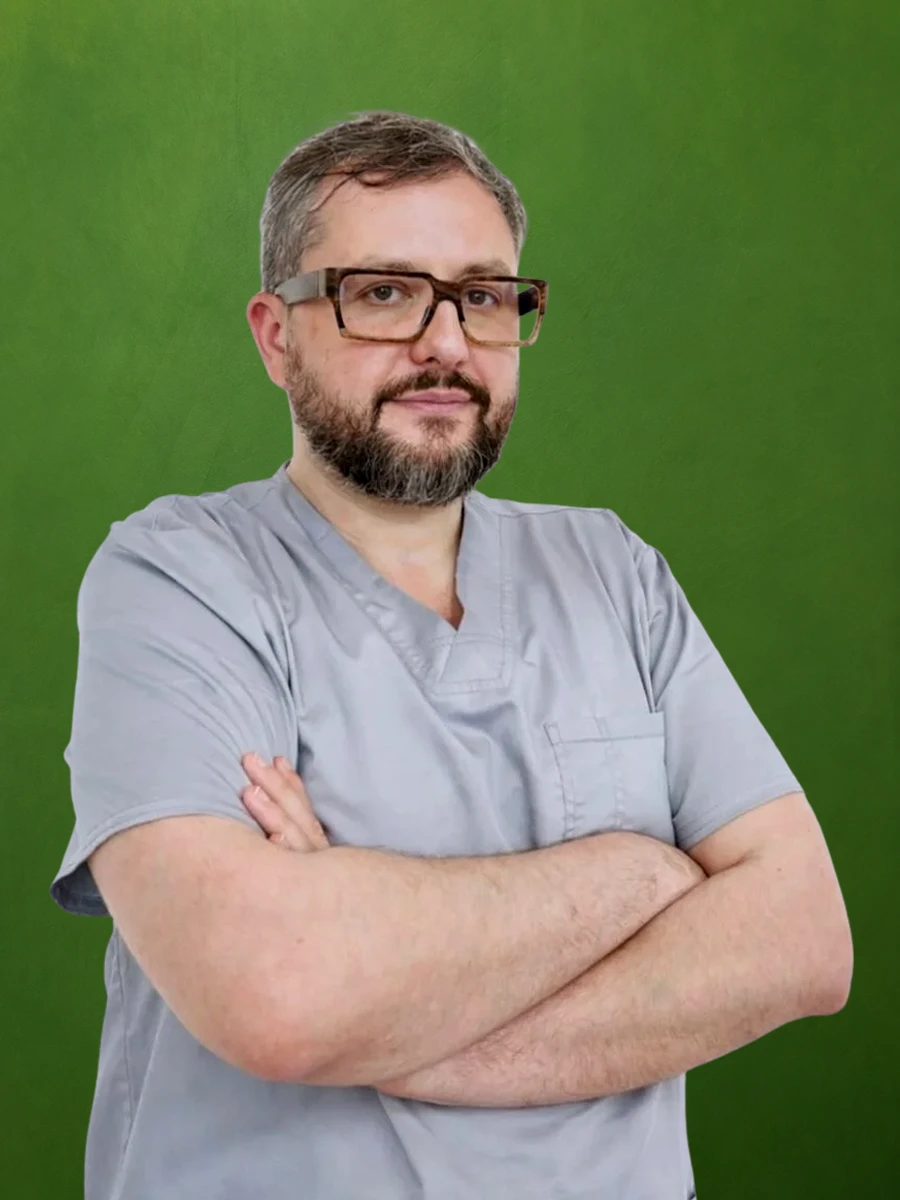
Gergely Kremeshnyy
Proctologist and surgeonThe treatment of anal fissures and other proctology procedures is led by Gergely Kremeshnyy, proctologist and surgeon. He completed his general medicine studies at Uzhhorod National University between 2005 and 2011. He has since pursued further specialist training in laparoscopic, minimally invasive, hernia and colorectal surgery, including training abroad and hospital-based training in colorectal surgery.
At Dermarevolta, he specialises in conditions of the rectum and perianal area, in particular haemorrhoids, anal fissures, fistulas, abscesses, polyps, genital warts and pilonidal sinus. In cases of anal fissure, he first assesses the cause of the pain, the extent of the findings and the options for conservative treatment. If a procedure is required, he may recommend targeted botulinum toxin treatment or another approach based on the current findings. He places great emphasis on a discreet approach, clear explanation of treatment options and patient comfort.
“With proctological problems, it’s important to overcome any embarrassment. My aim is to examine the patient discreetly, explain the cause of the pain and choose the gentlest possible approach.” – Gergely Kremeshnyy
When to see a doctor about an anal fissure
- After a bowel movement, you feel a sharp, burning pain in the rectum that can last for hours afterwards.
- You repeatedly notice bright red blood on toilet paper, in your stool or on your underwear.
- Fear of pain makes you deliberately delay bowel movements, which makes both the constipation and the fissure itself worse.
- The fissure has not healed for more than four to six weeks, and the pain and bleeding keep coming back.
- Home treatment with ointments and sitz baths isn’t helping at all, or only brings brief relief before the pain returns.
- You can feel a small skin lump near the anus, or a firm, non-healing edge on the fissure itself.
Why choose us for anal fissure treatment
An experienced proctologist and surgeon
Anal fissures are treated by Gergely Kremeshnyy, a proctologist and surgeon specialising in conditions of the rectum and perianal area. You see the same specialist for diagnosis, treatment recommendations and any procedure that may be needed.

From ointments to surgery
Depending on the findings, we can recommend several treatment options, from conservative approaches through Botox to targeted treatment of a chronic fissure. The doctor chooses the method individually based on the type of fissure, symptoms and the patient’s overall health.

Maximum discretion
An anal fissure is a sensitive topic, so we look after you in the privacy of a private clinic. Both the examination and the procedure take place calmly, with respect and without any waiting-room rush.
A focus on pain relief
Pain from an anal fissure is often severe, so the aim of treatment is to relieve the spasm of the anal sphincter and reduce irritation at the site of the fissure. This can help create better conditions for healing.
Outpatient, without general anaesthetic
Pain from an anal fissure is often severe, so the aim of treatment is to relieve the spasm of the anal sphincter and reduce irritation at the site of the fissure. This can help create better conditions for healing.

Sterile clinic environment
Treatment takes place under sterile conditions at our clinic on Smaragdová 1 in Bratislava. We maintain strict hygiene standards that reduce the risk of infection and complications.
Frequently asked questions about anal fissures
The pain is caused by a spasm of the anal sphincter, which tightens after being irritated by the fissure and, at the same time, reduces blood flow to the area. This is why the pain after a bowel movement is often so sharp and can last for several hours. The aim of treatment is to relieve this spasm, which eases the pain and gives the fissure a chance to heal.
In most cases, conservative treatment is enough, especially for an acute fissure. We start with sitz baths, ointments to relax the sphincter and dietary changes to soften the stool. Surgery is only considered if the fissure fails to heal after several weeks or keeps recurring. We always decide on the next steps together, based on how the fissure responds.
No. Botox, Surgitron treatment and sphincterotomy are all performed under local anaesthetic, so you won’t feel pain during the procedure. Most patients feel relief soon after the procedure, once the sphincter spasm eases. The area may be sensitive for a few days afterwards, and any discomfort can usually be managed with standard painkillers.
With proper care, an acute fissure often heals within four to six weeks. A chronic fissure takes longer to heal and sometimes requires a procedure. After Botox or sphincterotomy, pain usually eases quickly, although full healing takes several weeks. The exact time depends on the condition of the fissure and how well the aftercare routine is followed.
The risk is low, but it cannot be completely ruled out. Lateral sphincterotomy only divides a small part of the internal sphincter, so permanent weakening of continence is rare. Some patients briefly experience slightly reduced control over passing wind, which usually resolves on its own. Before the procedure, we assess the sphincter and choose the method to make it as safe as possible for you.
Treatment of an acute anal fissure costs €250. Treatment of a chronic fissure with Surgitron or Botox injections into the sphincter costs €650. A pre-procedure consultation costs €60, which is deducted from the cost of the procedure if booked. We confirm the exact price after a proctology examination, as it depends on the type of fissure and the method chosen.
Home care significantly speeds up healing and, in the case of an acute fissure, is often enough on its own. The aim is to soften the stool and relax the sphincter so the fissure isn’t irritated further.
- Take warm sitz baths several times a day, especially after a bowel movement.
- Drink at least two litres of fluids a day and eat enough fibre.
- If you’re constipated, use a stool softener such as lactulose.
- Don’t hold in bowel movements, and avoid straining hard.
Yes, it can, if the underlying causes, such as constipation or hard stools, persist. That’s why, after healing, we focus on habits such as keeping stools soft, eating enough fibre and drinking plenty of fluids. The risk of recurrence is lowest after sphincterotomy and somewhat higher with conservative treatment. If symptoms return, please contact us and we’ll reassess the fissure.
Book an examination or consultation

Contact
Dermarevolta