
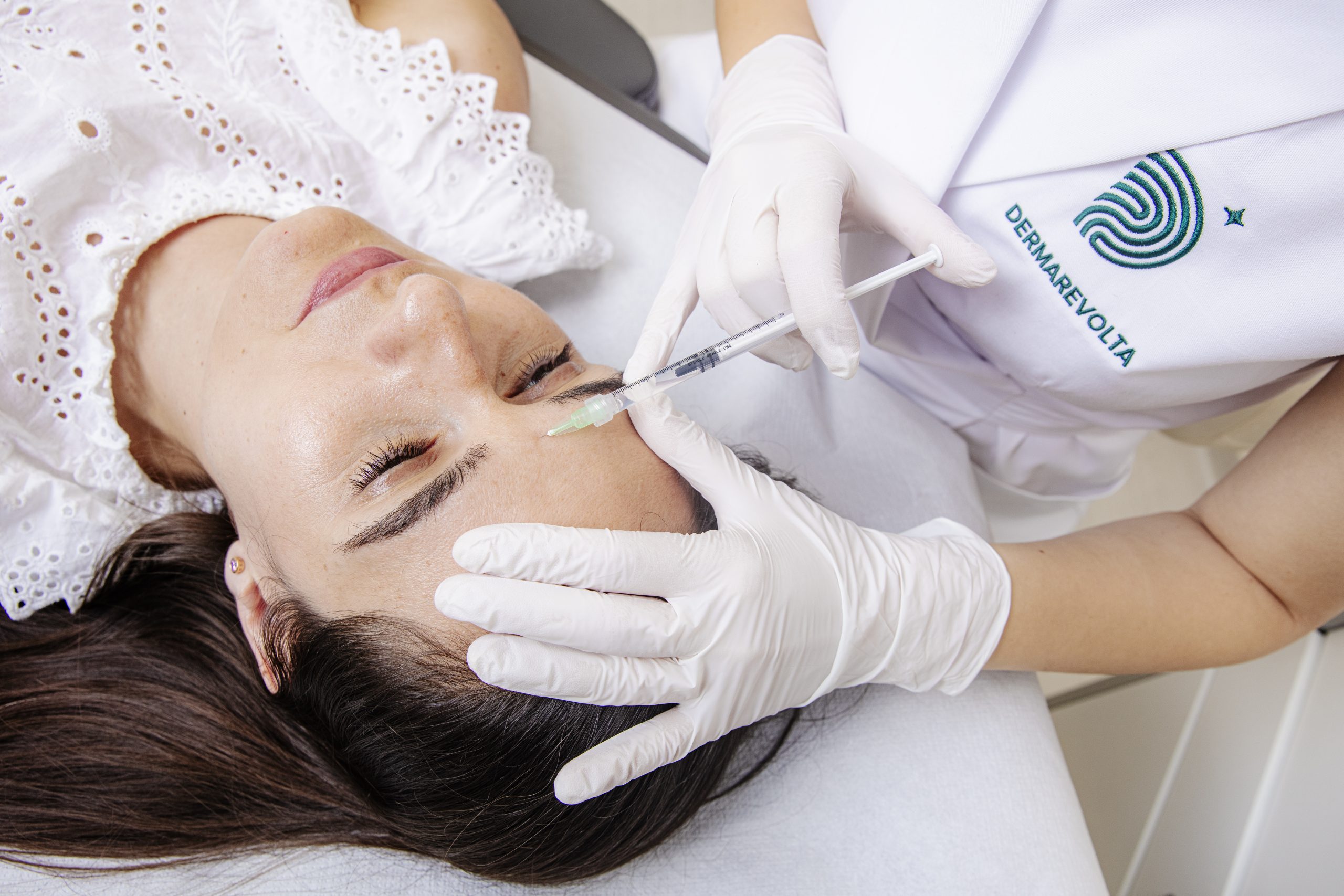
Hyaluronic acid is a substance naturally found in our body. It has a remarkable ability to bind large amounts of water, but its levels decline with age, leading to a loss of skin elasticity and firmness, the appearance of wrinkles, loss of tissue volume, and under-eye circles. Hyaluronic acid dermal fillers are most commonly sought by women and men from around the age of 35, when minor skin imperfections become more noticeable. However, the treatment is not limited to this age group and is often chosen by younger patients too, mainly to smooth acne scars, reduce a small nasal bump or protruding chin, or to reshape the lips.
Which areas can be treated with hyaluronic acid?
Hyaluronic acid dermal fillers are an excellent solution for smoothing and filling wrinkles across the whole face, enhancing facial contours, lifting drooping corners of the mouth, softening nasolabial folds, rejuvenating the décolletage and neck, shaping and enlarging the lips, and rejuvenating the hands.
What does hyaluronic acid filler treatment involve?
At Dermarevolta, we always recommend that clients first attend a consultation with a doctor, who will assess your facial features and skin condition and then suggest a suitable product to achieve the best possible result. The consultation is also a great opportunity to have any questions answered.
The application of hyaluronic acid filler is a relatively painless procedure. The treated area is numbed with a local anaesthetic cream, which is left to take effect for long enough to make the treatment as comfortable as possible. The skin is thoroughly cleansed and disinfected, and the filler is then injected using very fine needles.
We recommend repeating the treatment approximately every 3–12 months, depending on how quickly the filler is absorbed by the individual.
The first few hours after the filler are important
As hyaluronic acid filler treatment is a non-invasive procedure, recovery is generally quick. However, we advise against bending forward for around the first 2 hours, and strenuous physical activity should also be avoided during this time. After the treatment, your doctor will give you detailed aftercare instructions and may recommend suitable skincare products to help ease any post-treatment effects. In rare cases, small bruises may appear, which usually fade within a few hours.