
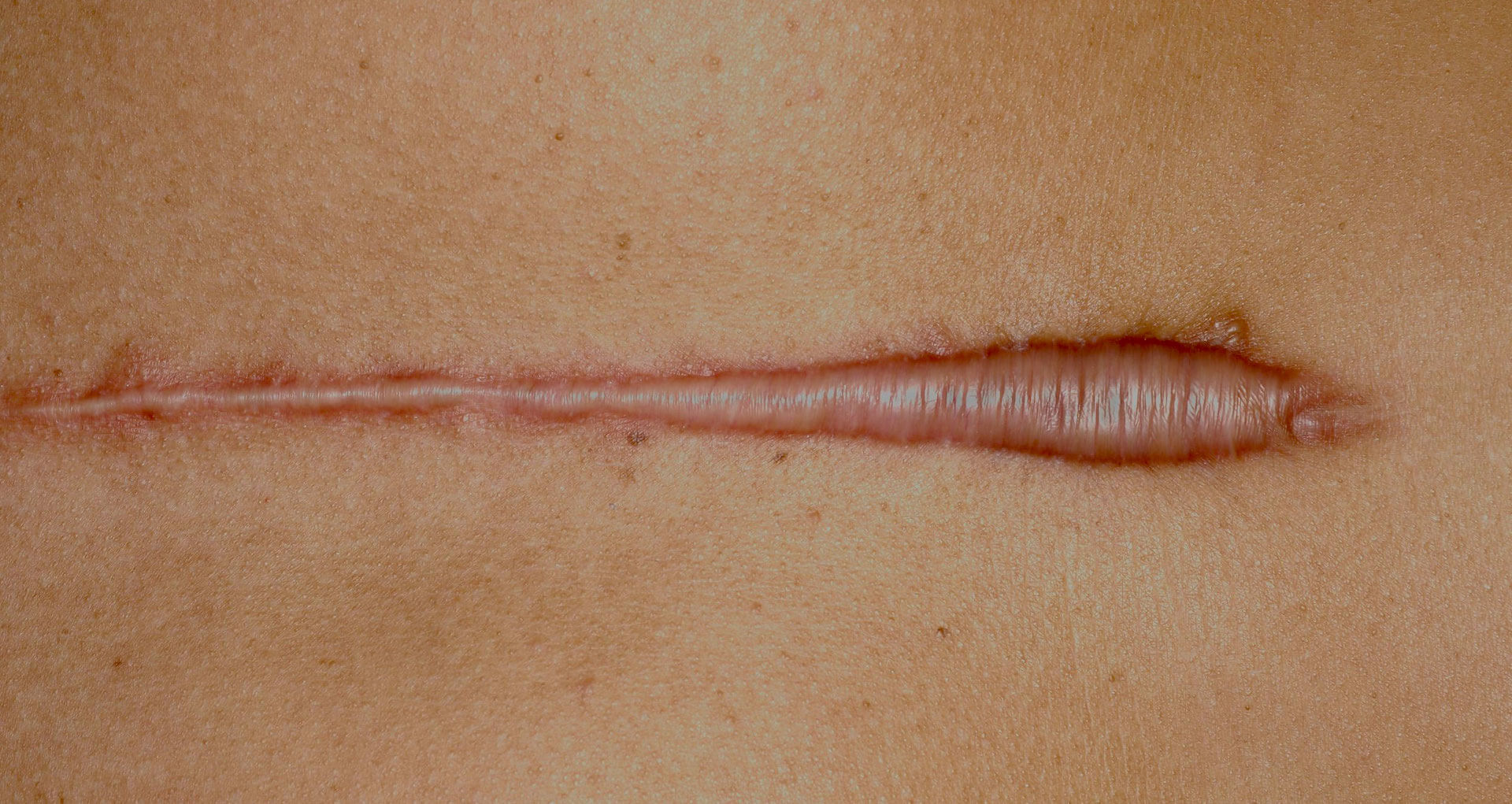
Scars that form on the body after acne, various injuries or procedures can be a significant aesthetic problem for many people, often leading to a marked loss of self-confidence.
Wound healing takes place in three phases: the inflammatory, proliferative and remodelling phases. Scars are divided into normal and pathological. Only very superficial wounds, affecting just the papillary layer of the dermis, can heal without leaving a scar.
Which types of scars are suitable for surgical correction?
Scars are divided into 3 categories:
- Hypertrophic scars (raised) – these form as a result of excessive production of new skin, which is why they are also called hyperactive scars. They are usually red, thick and firm. They are often itchy, painful or uncomfortable. They tend to rise above the level of the surrounding skin, but do not spread beyond the area of the original wound, meaning their growth is limited by the size of the wound. They usually develop within two weeks of the injury.
- Keloid scars (scars extending beyond the wound margins) – these are thick, rounded and form irregular clusters of scar tissue that extend beyond the boundaries of the original wound. They are often red or darker than the surrounding skin. They may also develop later after the injury and can worsen during pregnancy. They can form at any age, but tend to develop more quickly in younger people and those with darker skin. A tendency to develop keloids is often hereditary.
- Atrophic scars (depressed) – these develop when a wound does not heal properly and an insufficient amount of new connective tissue is formed. The resulting scar lies below the level of the surrounding skin, for example scars caused by acne or chickenpox.
Will it just leave another scar?
No operation can currently be performed without leaving some form of scar. What really matters is how the wound is treated and closed during the procedure, and what kind of scar results. However, if you have an unsightly scar, we can surgically revise it so that it becomes far less noticeable and minimally visible.
The procedure is performed on an outpatient basis under local anaesthesia, during which the necessary amount of scar-damaged tissue is surgically removed and the wound is then closed with an aesthetic plastic suture. After the procedure, the wound is covered with a sterile dressing, so there is no need to worry about any drains. The procedure itself takes approximately 30 minutes, depending on the size of the scar.
Sutures are removed after 7 days for scars on the face and after 14 days for scars on the body. We recommend a follow-up visit to the surgical clinic to check the healing of the scar after 1 month, then after 3 months and after 6 months. If the scar does not heal well, the corticosteroid Diprophos can be applied to help achieve the best possible aesthetic result.