

Treatment of hair loss in Bratislava
When hair falls out, the first step is to find out why. At Dermarevolta clinic in Bratislava, a trichologist assesses the type of hair loss – for example androgenetic alopecia, telogen effluvium or alopecia areata – and suggests treatment based on the findings. This may include medication for home use, hair mesotherapy, application of your own plasma or Regenera Activa. We also monitor the course of treatment using digital trichoscopy, which makes it possible to compare the findings over time.
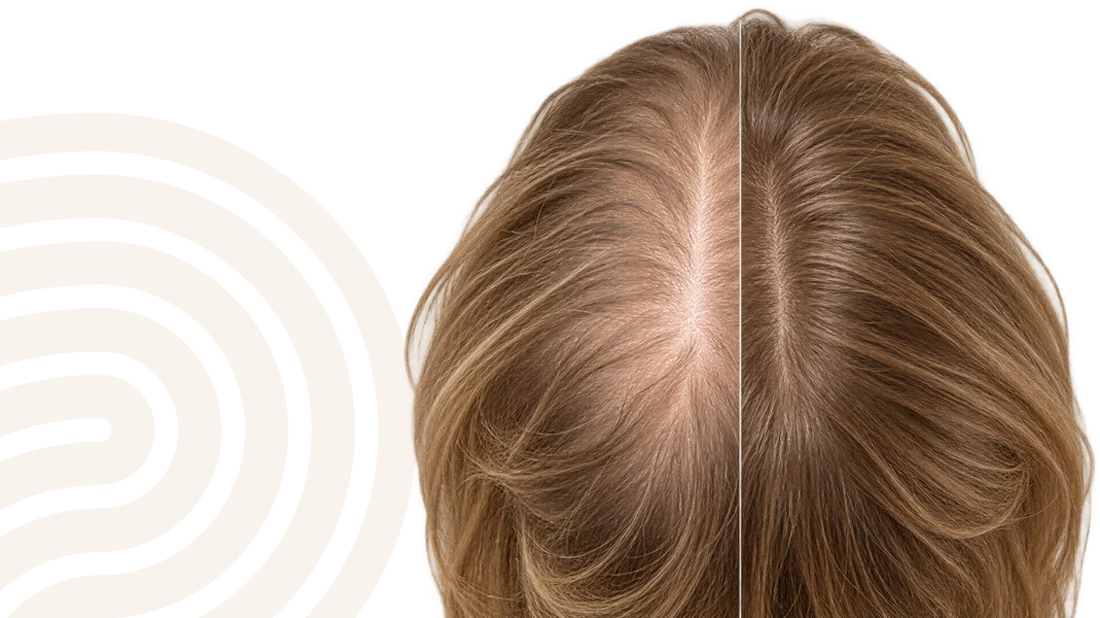


How we treat hair loss
Hair loss can have several causes – hereditary predisposition, hormonal changes, iron deficiency, thyroid disease, a past illness, childbirth or long-term stress. The right treatment therefore depends on the specific type of alopecia. Depending on the findings, it may include home therapy, in-clinic treatments or a combination of both. With some types of treatment, the first changes can be assessed after about three months. The result develops gradually, and the time needed to assess it depends on the diagnosis and the chosen treatment.

Diagnosis and determining the type of alopecia
We choose treatment according to the cause and type of hair loss, which we assess during a trichological examination with digital trichoscopy. If the findings suggest an internal cause, the doctor may recommend laboratory tests, for example a complete blood count, ferritin or thyroid function parameters.

Medication and home treatment
In androgenetic alopecia, home treatment is usually the foundation. The doctor may recommend, for example, topical minoxidil or, depending on the findings, consider medication that affects the action of hormones. The plan also includes appropriate scalp care.

Hair mesotherapy
During hair mesotherapy selected active substances, such as vitamins and amino acids, are applied into the scalp through tiny injections. We choose the composition of the product and the number of sessions according to the findings. The treatment can be supplemented with LED phototherapy.

Application of your own plasma (PRP)
During hair plasma therapy we prepare plasma containing platelets and growth factors from a small blood sample and apply it to the scalp. We use PRP mainly as a supplementary treatment for androgenetic alopecia; we assess suitability individually based on the findings.

Regenera Activa for androgenetic alopecia
In selected patients with androgenetic alopecia, we may consider Regenera Activa. An autologous cell suspension (micrografts) is prepared from small skin samples from the back of the head and applied to areas with thinning hair. The procedure is performed on an outpatient basis under local anaesthesia.

Inflammatory forms of alopecia and check-ups
In some inflammatory forms of scarring alopecia, the doctor may choose topical or injectable corticosteroid treatment. We monitor the findings at check-ups, including with digital trichoscopy, and adjust treatment according to the results.
How much does hair loss treatment cost?
The cost of treatment depends on the diagnosis and the approach the doctor proposes. Sometimes home treatment is enough; in other cases, it is supplemented with in-clinic treatments. Below are indicative prices from our price list; we will go through the specific plan and its cost with you after the examination. For mesotherapy and plasma, we also offer packages of several sessions.

Olena Lavreshyna
Trichologist and DermatologistMUDr. Olena Lavreshyna focuses on the diagnosis and treatment of hair loss, alopecia and scalp diseases. She studied general medicine at the Faculty of Medicine of Kharkiv National University, gained experience in trichology at the Institute of Trichology under the supervision of Prof. Ovcharenko and later worked as a dermatologist and trichologist in Bratislava.
In her practice, she uses trichoscopy and chooses treatment according to the type of alopecia and the specific findings. She is a member of the European Academy of Dermatology and Venereology (EADV) and the Ukrainian Hair Research Society (UHRS).
She discusses with patients the expected course of treatment, the time needed to assess the results and its possible limitations. She adapts the treatment plan so that it is manageable in the long term. She consults in Slovak, English and Ukrainian.
When to see a doctor about hair loss
- Hair loss is heavier than usual, has lasted several weeks or is gradually getting worse.
- You notice thinning hair and visible scalp on the crown, along the parting or above the forehead.
- After childbirth, illness or another major strain, hair loss persists or hair density does not gradually recover.
- Round bald patches have appeared on your scalp, or hair breaks in clearly defined areas.
- Your scalp is red, itchy, burning, or scales or crusts form on it.
- You have started treatment on your own and want to know whether it is suitable for your type of hair loss.

Why entrust your hair loss treatment to us

Treatment based on diagnosis
We choose the approach according to the type of alopecia, the trichoscopic findings and, if necessary, laboratory test results.

Medication and in-clinic treatments
Depending on the findings, home treatment can be supplemented with mesotherapy, plasma or Regenera Activa. The same doctor leads and monitors the treatment.
Monitoring the course of treatment
Digital trichoscopy makes it possible to document the findings and compare how they develop at follow-up examinations.
A doctor focused on hair
Treatment is led by a trichologist with dermatological experience who also assesses scalp diseases that require different treatment.

Gynaecology and endocrinology in one place
If the findings suggest a hormonal or endocrine cause, we can arrange the follow-up examination directly at the clinic.
Clear explanation
We will explain in advance what you can expect from treatment, how long it takes and when it makes sense to change the approach.
Frequently asked questions about hair loss treatment
It depends on the cause and stage. With some types of hair loss, shedding can be significantly reduced and regrowth supported; with others, the main goal is to slow further thinning and preserve existing hair. Telogen effluvium often subsides gradually on its own once the triggering cause has been removed. Androgenetic alopecia is a long-term condition, so its treatment is usually long-term as well.
The choice of treatment depends on the diagnosis. In androgenetic alopecia, the basis is mainly treatment with proven efficacy, for example topical minoxidil and, depending on the patient, other medication. PRP, mesotherapy or Regenera Activa can be supplementary options for selected patients. Their suitability is assessed individually.
Yes. Treatment usually also includes home therapy – for example topical minoxidil and, in androgenetic alopecia, depending on the patient, medication that affects the action of hormones. The doctor will always go through suitability, dosage and possible side effects with you in person, especially if you are planning a pregnancy, breastfeeding or taking other medication.
Yes, we treat both women and men. In men, the most common cause is androgenetic alopecia, which typically shows as a receding hairline at the temples and thinning on the crown. In women, we more often see thinning along the parting and hair loss after childbirth or during hormonal changes. With androgenetic alopecia, it is advisable to start treatment as early as possible.
Increased hair loss two to four months after childbirth is common and usually subsides gradually on its own. It is worth coming for an examination if the hair loss persists, your hair has thinned significantly or you have other symptoms, such as fatigue. If the medical history and findings indicate it, we will recommend laboratory tests, for example iron stores or thyroid function. When proposing treatment, we also take breastfeeding into account.
Yes. Alopecia areata has a typical clinical and trichoscopic appearance. During the examination, we also assess whether the patchy hair loss has a different cause. Treatment depends on the extent of the disease, its activity, the patient's age and the previous course.
A trichological examination with digital trichoscopy costs €120. Hair mesotherapy with LED therapy costs €110 per session, application of your own plasma to the scalp €195 and Regenera Activa €1,400. For mesotherapy and plasma, we also offer packages of several sessions. The total price depends on the chosen treatment and the number of sessions.
The result of treatment depends greatly on regularity. A few simple rules will also help.
- Use the prescribed treatment regularly as recommended by the doctor and do not stop it without consultation.
- Avoid tight ponytails and braids, and limit frequent straightening and colouring.
- Eat a varied diet with enough protein; take iron supplements only if a deficiency has been confirmed or on a doctor's recommendation.
- Avoid crash diets.
- Do not judge the effect of treatment after a few weeks – the hair cycle takes months.
Book an examination or consultation

Contact
Dermarevolta