

Removal of a toe exostosis
We remove a toe exostosis, a painful bony growth, in a single day, relieving the pressure and pain you feel when walking. We free the growth through a small incision and smooth the underlying bone. The procedure is carried out on an outpatient basis at Dermarevolta clinic in Bratislava, under local anaesthesia and as day surgery, and the removed tissue is sent for histological examination. You walk out on your own two feet afterwards, with no need to worry about hospital admission or general anaesthesia.



How we remove a toe exostosis
A toe exostosis is not a cosmetic skin problem but a bony growththat needs to be confirmed on an X-ray and removed surgically. Ointments, plasters and nail trimming will not get rid of it. We tailor the procedure to the size of the growth and to whether it has already deformed the nail. Smaller findings are treated with a single short incision, while larger ones are complemented with lateral nail fold reconstructionso the nail can grow straight again. The whole procedure is carried out on an outpatient basis under local anaesthesia and takes around 30 to 45 minutes. Below we walk you through each step of the treatment.

Diagnosis and X-ray of the nail bed
Before the procedure, we examine the toe and confirm the bony growth on an X-ray, which shows its size and position relative to the nail bed. This also allows us to rule out other causes, such as a granuloma, a wart or a subungual naevus.

Local anaesthesia for a pain-free toe
We numb the toe with a local nerve-block anaesthetic, so you feel no pain during removal of the exostosis. General anaesthesia is not required for this procedure; you remain conscious throughout and walk home on your own feet afterwards.

Removal of the bony growth with an osteotome
Through a small incision above the growth, we lift the nail plate, remove the bony prominence with an osteotome and smooth the surrounding bone. The incision is usually 1–2 cm long, making this a minimally invasive, gentle procedure.

Lateral nail fold reconstruction
If the exostosis has already deformed the nail or its lateral folds, we carry out a small reconstructive procedure so that the nail grows straight and does not become ingrown once healed. This reduces the risk of the problem returning later.

Histological examination of the tissue
Every piece of removed tissue is sent for histological examination. This confirms the benign nature of the growth and reliably rules out other, more serious findings. We discuss the result with you in person at your follow-up appointment.

Wound care and monitoring of healing
We clean and dress the wound, and the toe remains covered. You return for a check-up and suture removal after 10–14 days. We explain how to look after the toe at home so that it heals well and without unnecessary complications.
How much does exostosis removal cost?
The price depends on the size of the exostosis and on whether lateral nail fold reconstruction is also needed. We confirm the exact price only after an in-person examination and X-ray. Below are indicative prices from our price list; the consultation before the procedure is deducted from its cost when you book the treatment. The price of the procedure includes local anaesthesia, the treatment itself and the first wound dressing.
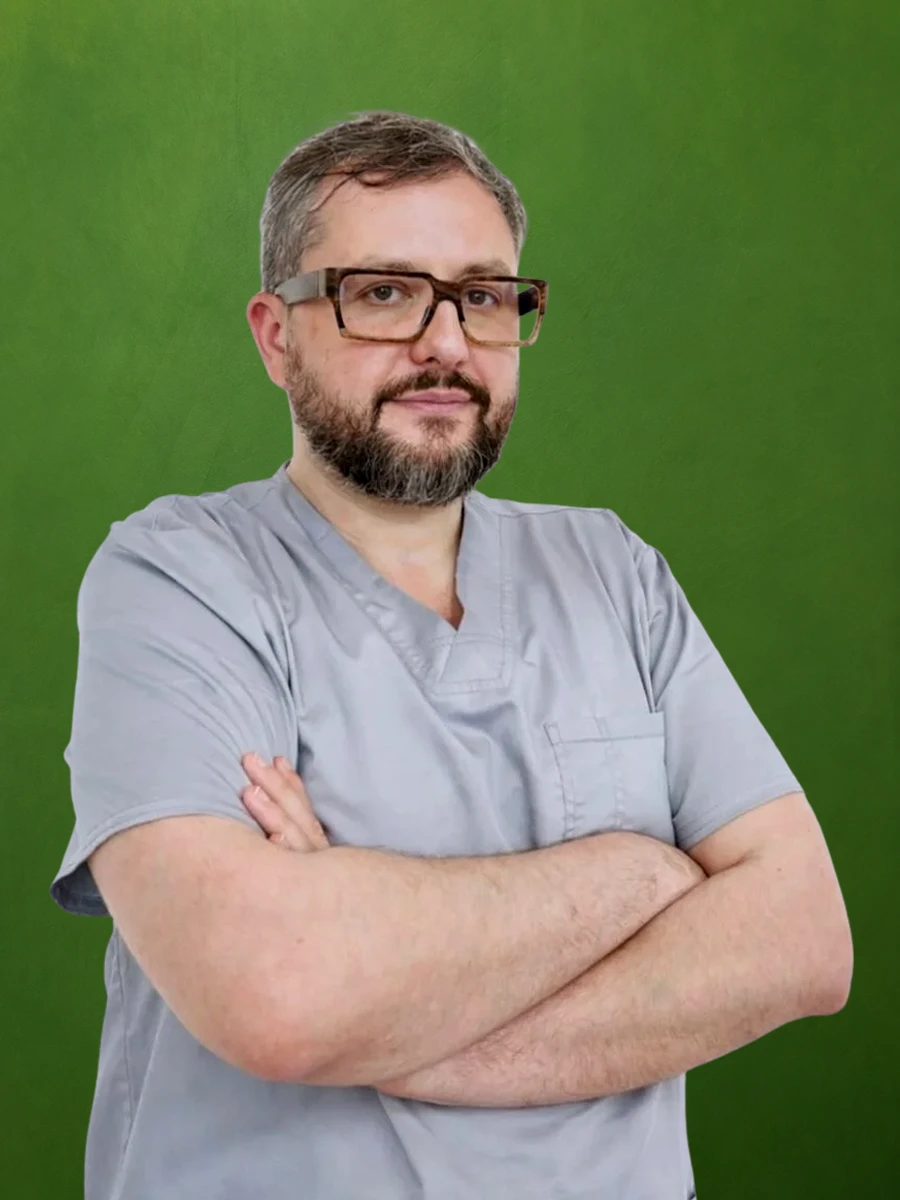
Gergely Kremeshnyy
Proctologist and surgeonDay-surgery procedures, including exostosis removal, are performed by Gergely Kremeshnyy, an experienced surgeon and proctologist. He completed his general medicine degree at Uzhhorod National University between 2005 and 2011. He has continued his professional training in laparoscopic, colorectal and minimally invasive surgery, including courses focused on hernias and modern surgical techniques.
He specialises in surgery and proctology, in particular the treatment of haemorrhoids, anal fissures, perianal fistulas, abscesses, polyps, pilonidal sinus, and anal or perianal condylomas. When treating bone and nail conditions, he combines surgical precision with an effort to preserve the natural shape and function of the nail. In cases of exostosis, he focuses on the complete removal of the bony growth and, where needed, on reconstruction of the lateral and distal nail folds.
“An exostosis can cause pain, pressure and deformation of the nail. The aim of the procedure is to remove the bony growth gently and create the right conditions for smooth healing.” – Gergely Kremeshnyy
When to consider exostosis removal on the toe
- You feel a hard lump under the toenail of your big toe that presses and hurts with every step or inside your shoe.
- The nail lifts above the growth, changes shape or colour, separates from the nail bed, or repeatedly grows into the surrounding skin.
- Redness, oozing or a small wound that keeps recurring at the site of the growth and takes a long time to heal.
- Ointments, plasters and pedicures don't resolve the problem, because the cause lies in the bone, not the skin or the nail itself.
- During sport, running or even longer everyday walking, the pain under the nail restricts you more and more noticeably.
- You want to be sure that the lump under the nail isn't something more serious, so you need an X-ray and histology to confirm this.
Why trust us with exostosis removal
Experienced, qualified surgeon
The procedure is performed by a doctor with specialist accreditation in general surgery, who treats bony growths as well as nail conditions.

X-ray and accurate diagnosis
Before the procedure, we confirm the exostosis on an X-ray and rule out other causes of discomfort under the nail. We only operate once the finding is clear and the procedure is genuinely necessary.
Day surgery
We treat exostosis on an outpatient basis, under local anaesthesia, without hospitalisation or general anaesthesia. You go home the same day and gradually return to your normal routine.

Focus on healthy nail growth
The aim is not just to remove the growth, but also to reshape the nail bed so the nail can keep growing without becoming ingrown. This helps prevent recurring problems and the need for a further procedure.

Histology and peace of mind
The tissue removed is sent for histological examination at an accredited laboratory. This gives you written confirmation of the benign nature of the finding and reassurance that nothing important has been overlooked.

Sterile clinic environment
The procedure takes place under sterile conditions at the clinic on Smaragdová 1 in Bratislava. We maintain strict hygiene standards that reduce the risk of wound infection.
Frequently asked questions about exostosis removal
The procedure itself is not painful. We numb the toe with local anaesthesia, so you will only feel the initial injection during removal of the growth. Once the anaesthesia wears off, the area may be tender for one to two days, and the discomfort can usually be managed with standard over-the-counter painkillers. Severe pain is unusual; if it occurs, please contact us and we will check the toe.
The wound usually heals within two to three weeks, and the stitches are removed after 10 to 14 days. In the first few days, we recommend resting the toe and keeping the foot elevated; after that, you can gradually return to normal walking. For physical work or sport, allow for a more restful period of around 2–3 weeks. The exact timing depends on the size of the growth and whether reconstruction of the nail folds was also needed.
No. Exostosis removal is carried out on an outpatient basis, under local anaesthesia, as part of day surgery. General anaesthesia and hospitalisation are not required; after a short rest, you go home the same day. It's a good idea to come to the procedure with someone accompanying you and to wear comfortable, loose footwear that doesn't press on the toe.
Once the bony growth has been completely removed, recurrence is uncommon. We reduce this risk by smoothing the surrounding bone and, where needed, adding reconstruction of the lateral nail folds so the nail grows straight. However, no procedure can rule out recurrence with absolute certainty, which is why we check the toe at your follow-up appointment and advise you on how to look after it going forward.
Only a doctor can determine this reliably. An exostosis is a hard bony growth that is visible on an X-ray, whereas a wart is a soft, virus-related change in the skin. A dark spot or a wound under the nail that won't heal can also have other causes that need to be ruled out. That's why we take an X-ray before the procedure and send the removed tissue for histological examination.
Removal of a subungual exostosis costs €500. If reconstruction of the lateral nail folds is also needed, the price is €650–700. The consultation before the procedure costs €60, which is deducted if you go ahead and book the procedure. We confirm the exact price after an in-person examination and X-ray, as it depends on the size of the growth and the extent of the procedure.
In the first few days, loose, open footwear that doesn't press on the toe is best. Most patients return to regular shoes within one to two weeks, depending on how healing progresses. Wait around 2–3 weeks before sport, running or longer walks, and follow the advice given at your follow-up appointment. Keeping the foot elevated can help with any swelling.
Preparation is simple, and we'll cover most of the details at the consultation before the procedure. You can eat normally on the day of the procedure; keep the toe and nail clean and free of nail polish, and let us know in advance about any blood-thinning medication or allergies.
- Please tell us about any blood-thinning medication (e.g. Warfarin, Anopyrin) and any chronic conditions.
- Bring your X-ray image with you if it was taken at another facility.
- Wear loose, open footwear that doesn't press on the toe.
- Arrange for someone to accompany you on the way home.
Book an examination or consultation

Contact
Dermarevolta